
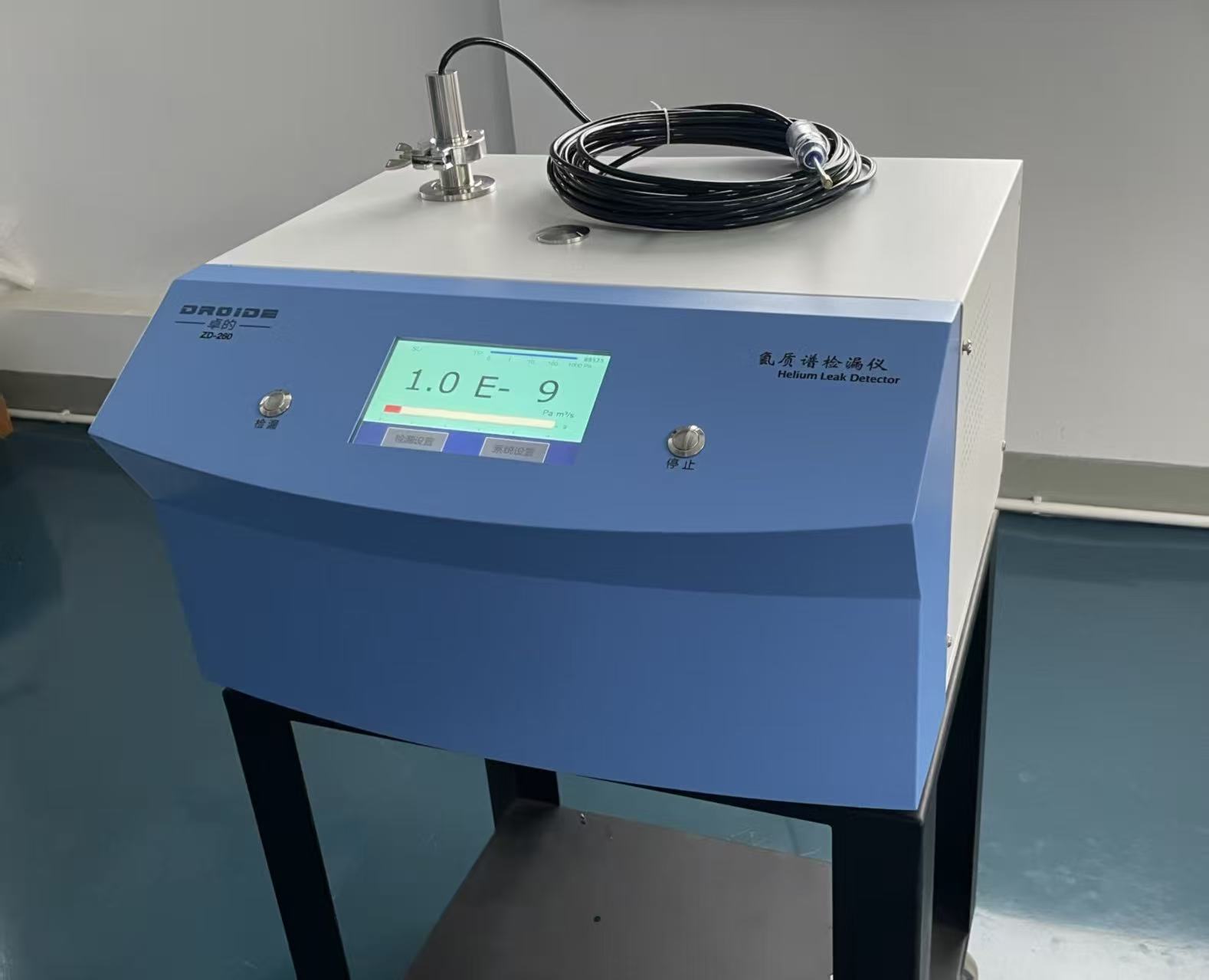
Helium Leak Detector for Gas Cylinders
Manufacturer of helium leak detectors for gas cylinder sealing verification. Used when plants need higher sensitivity than water or soap tests, especially for high-purity and high-value gas packages.
Request a Quote Contact UsOverview
The helium leak detector for gas cylinders is supplied by a manufacturer focused on gas cylinder processing equipment for international B2B buyers. Plants choose this equipment when they need stable daily output, clear operating steps and compatibility with LPG or industrial gas workflows. Instead of improvised methods, a dedicated machine improves repeatability, safety and documentation quality across shifts.
In export markets across Africa, the Middle East, South America and Southeast Asia, buyers often expand capacity in phases. A single helium leak detector investment can remove the largest bottleneck first. Later, the same station can join a cylinder refurbishment line with hydrostatic testing, gas cylinder filling equipment and related process machines. This modular path protects capital while keeping process standards consistent.
Our engineering support covers model selection, utility requirements and practical layout notes. When you share cylinder diameter, gas type and target cylinders per day, we recommend a configuration that fits real workshop conditions rather than a generic catalog package. Explore the broader process on our homepage solutions section before sending a formal inquiry.
Commercial buyers also evaluate spare parts, training effort and lead time. We structure quotations with machine scope, packing method and recommended consumables so local teams can commission equipment with fewer delays. Whether you operate an LPG bottling plant, an industrial gas factory or a third-party requalification center, the goal is the same: keep cylinders moving through cleaning, inspection and filling with fewer stops and clearer quality gates.
| Model | Sensitivity | Test Method | Application |
|---|---|---|---|
| HL-200 | 5×10⁻¹⁰ Pa·m³/s | Sniffer probe | Workshop spot-check |
| HL-500 | 5×10⁻¹¹ Pa·m³/s | Vacuum chamber | Production QC |
| HL-Production | 5×10⁻¹² Pa·m³/s | Automatic chamber | High-volume factory |
Applications
LPG and Industrial Gas Plants
Used in daily cylinder handling where helium leak detector performance affects safety compliance and production rhythm.
Cylinder Maintenance Centers
Supports requalification workflows that prepare cylinders for return to filling service.
Line Expansion Projects
Fits staged upgrades from one machine to a complete cylinder refurbishment line.
Application details always depend on cylinder family, local standards and yard logistics. A workshop with mixed diameters needs flexible fixtures. A high-volume LPG station needs faster cycle times and clearer operator prompts. Industrial gas facilities may prioritize purity-related cleaning or leak checks around the same process window. We discuss these constraints before finalizing the model list.
International buyers also consider voltage, compressed-air supply and installation space. Providing these inputs early avoids redesign after shipment. When the helium leak detector for gas cylinders is planned together with upstream or downstream machines, transfer distance and staging areas can be arranged to reduce repeated lifting and congestion.
Key Features
- Industrial duty design: Built for repeated daily cycles in gas cylinder plants.
- Process compatibility: Works with cleaning, testing, valve and filling stations.
- Operator clarity: Controls and workflows intended for practical plant training.
- Export project support: Documentation and packing for overseas installation teams.
- Model options: Multiple configurations for cylinder size and throughput targets.
- Maintenance access: Wear parts and service points considered for uptime.
- Scalable investment: Start with one station and expand into a full line later.
Key features should be judged against your shift pattern and quality records. A machine that looks advanced but slows changeover can reduce real output. We focus on stable clamping or processing, predictable cycle control and serviceability so the helium leak detector remains productive after the first month of operation.
Technical Advantages
| Manufacturer Focus | Gas cylinder processing equipment for B2B export projects |
|---|---|
| Primary Use | Manufacturer of helium leak detectors for gas cylinder sealing verification. |
| Integration | Compatible with hydrostatic testing, filling and refurbishment layouts |
| Markets | Africa, Middle East, South America, Southeast Asia and other export regions |
| Support | Model selection, quotation scope and remote technical guidance |
Technical advantage is not only a peak specification. Buyers compare how quickly operators learn the machine, how often wear parts are needed and whether the station can share utilities with nearby equipment. Our approach keeps those plant realities in the quotation discussion.
Typical commercial terms include one-set MOQ for standard machines, lead time based on configuration, T/T or L/C options for larger packages, and wooden-case packing for ocean freight. Warranty and recommended spare parts are listed so purchasing and maintenance teams can plan together.
Complete Solution Integration
Complete solution integration links this machine to the rest of the cylinder flow:
- Coordinate with cleaning and drying and valve handling
- Connect inspection through a hydrostatic testing machine
- Return approved cylinders to gas cylinder filling equipment
- Or plan the full path as a cylinder refurbishment line
For strategy-level process wording, read the complete gas cylinder processing solutions on the homepage, then send cylinder sizes and daily output through the inquiry form. Clear numbers produce better recommendations than generic “full automatic” requests.
Many international buyers start with the highest-impact station, confirm production results, then add neighboring machines. Keeping one manufacturer for major stations simplifies spare-parts communication and layout consistency as the plant grows.
FAQ
When do plants need helium leak detection?
When sealing requirements are stricter than ordinary bubble tests, such as specialty gases, medical gases or premium industrial packages.
Can it test valve seats and weld areas?
Yes. Typical uses include valve seat leaks, joint sealing and weld-related micro-leak checks.
Is helium leak detection a replacement for hydrostatic testing?
No. It complements hydrostatic testing by focusing on gas-tight sealing rather than structural pressure resistance.
Related Products
Request a Quotation
Send cylinder size, gas type and daily output. We will recommend the right configuration.
Submit Inquiry